
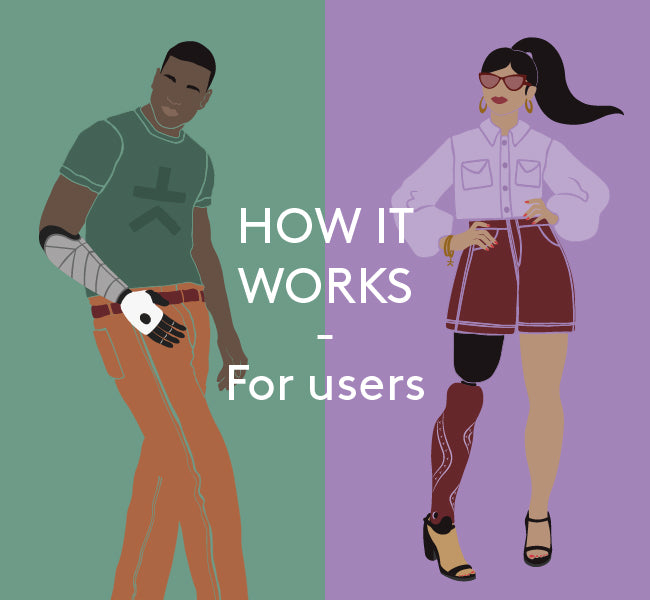

Cover types overview
Our covers are available across several categories to suit different prosthetic setups, user preferences, and functional needs. Each cover is individually tailored to the user's prosthesis and anatomy.

Leg covers - BK/TT
Designed for transtibial prosthetic setups to restore lower-leg shape and provide a protective cosmetic layer without affecting function.
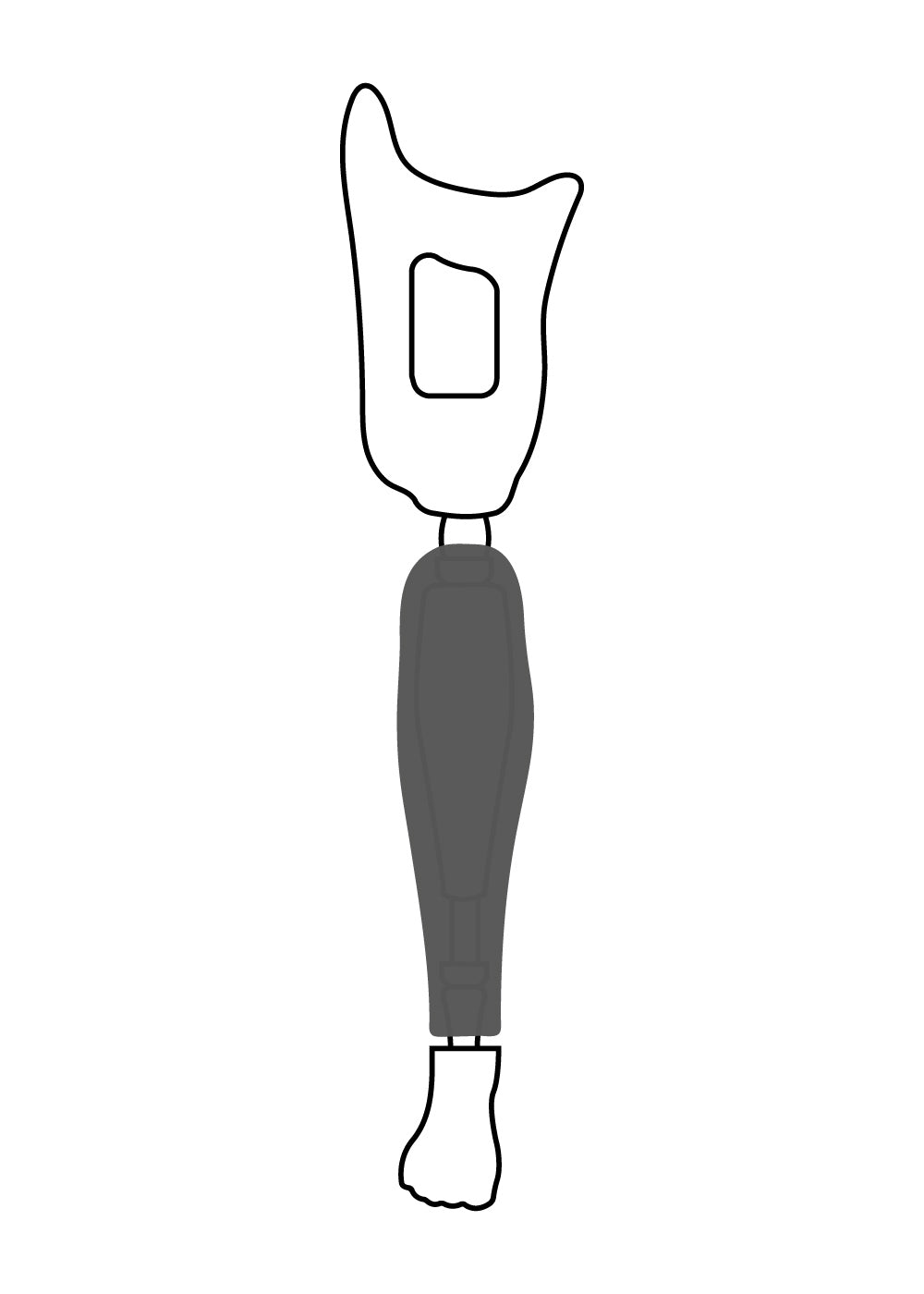
Leg covers - AK/TF
Designed for transfemoral prosthetic setups to restore lower-leg shape and provide a protective cosmetic layer without affecting function.
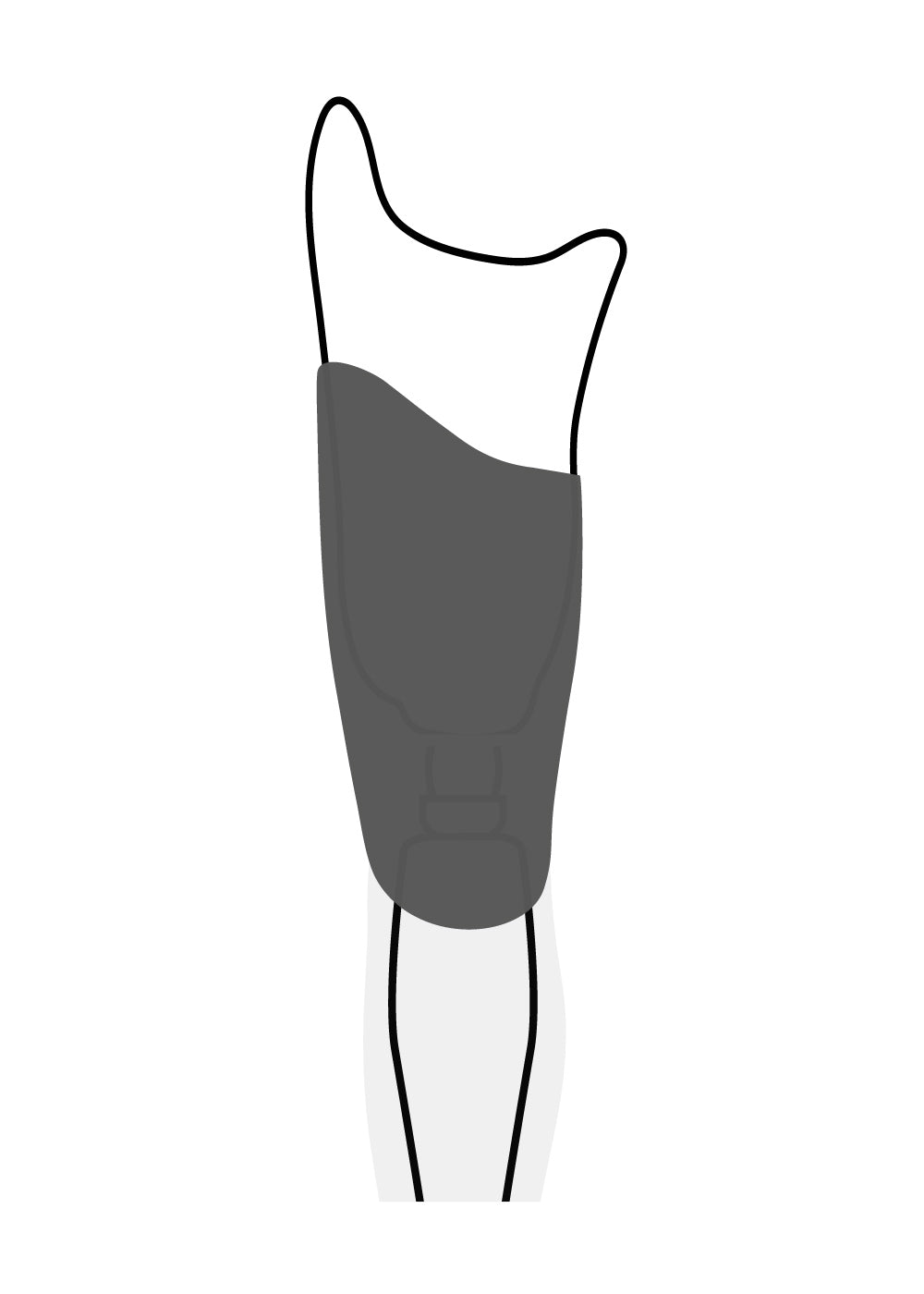
Thigh covers
A standalone upper-leg cover used independently or paired with an existing AK cover for extended shape restoration.
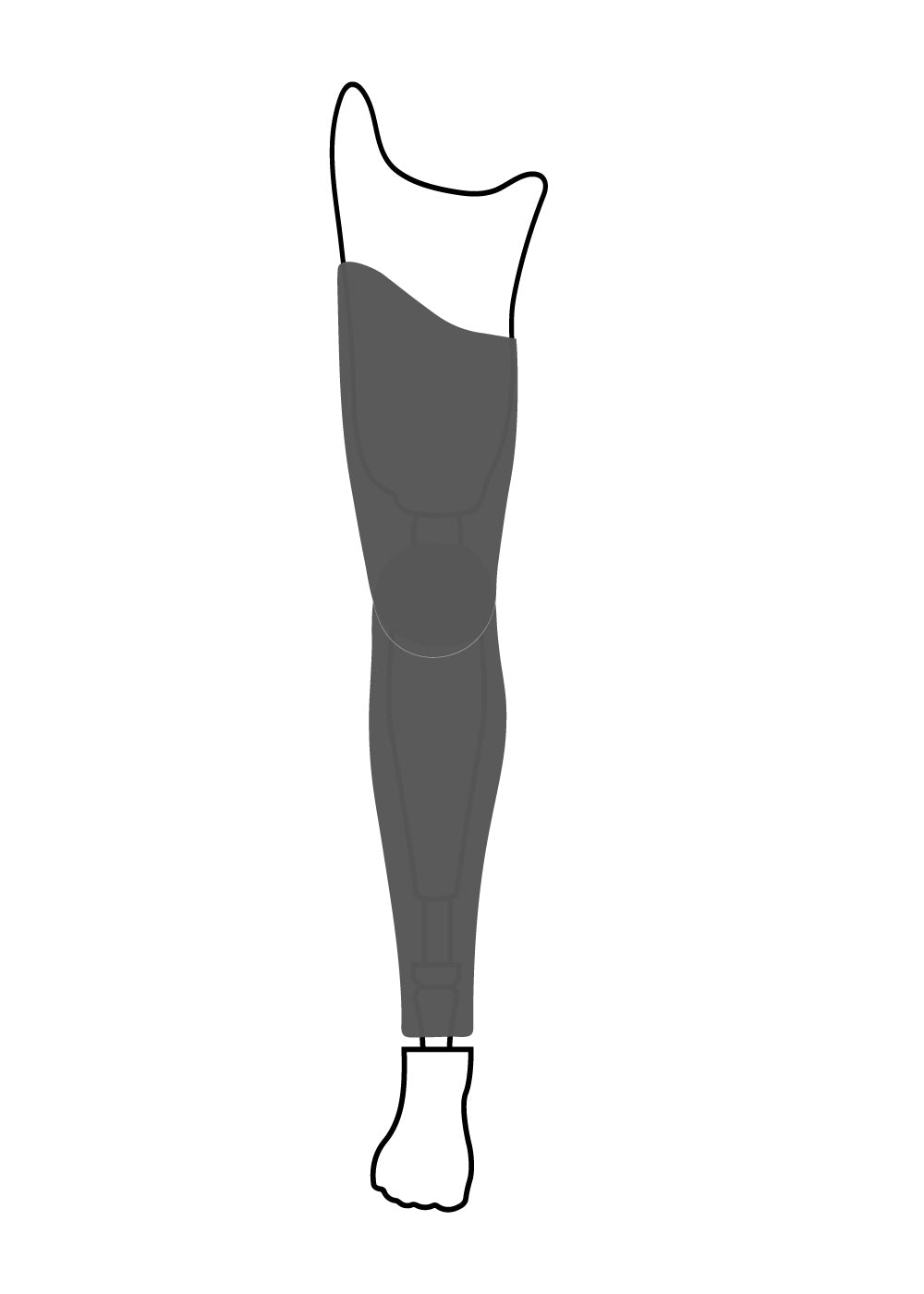
Full leg set
A combined thigh and AK cover creating a seamless silhouette from thigh to ankle.
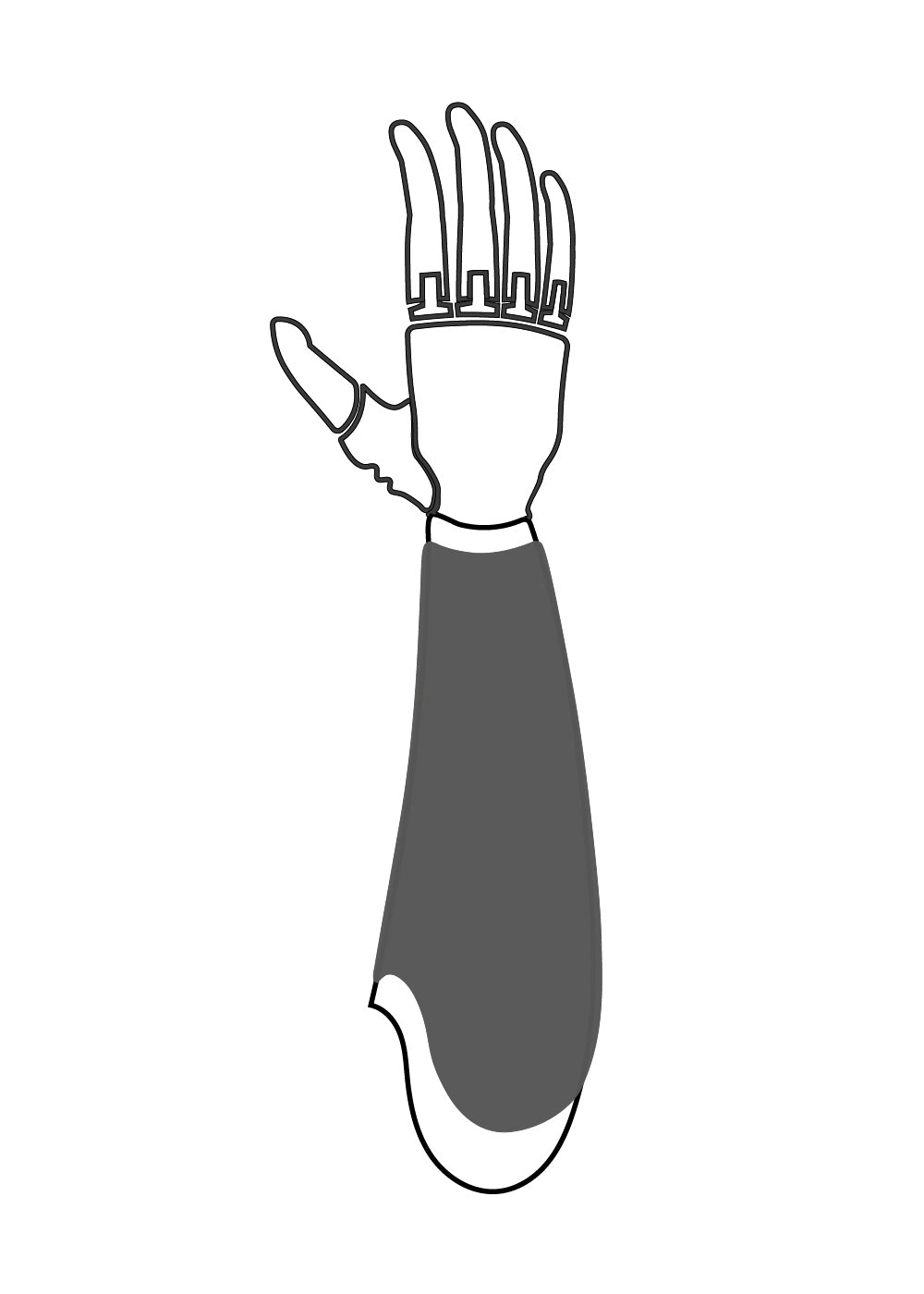
Arm covers
A lightweight cosmetic layer for prosthetic arms, designed for quick mounting and easy interchangeability.
Functional features
Performance & Durability
Designed to add minimal weight to the prosthesis while maintaining structure and durability. Weight varies depending on cover type, size, and design.
Built to withstand the demands of everyday use.
Suitable for use in wet conditions* and easy to clean when needed.
*After exposure to salt water, we recommend rinsing the cover and attachments with fresh water.
Non-absorbent materials make the covers easy to wipe clean and maintain.
Provides an additional layer of protection for prosthetic components against everyday bumps.
Workflow & Usability
A digital workflow that replaces the manual fabrication traditionally associated with cosmetic solutions, reducing the amount of clinic time required while simplifying future updates and re-orders.
Designed for simple attachment and removal, making cleaning, adjustments, and style changes easier.
Our standard attachment system is developed to allow for adjustments of the cover to compensate for smaller alignment changes to the prosthesis.
Compatibility & Fit
Every cover is individually designed around the user's anatomy and prosthetic setup. This allows us to accommodate a wide range of component combinations, alignments, and clinical requirements.
Designed to restore the shape and silhouette of the leg.
Customization & Design
From skin tones and collection designs to fully custom creations, clinics can offer cosmetic solutions suited to a wide range of user preferences, lifestyles, and reimbursement scenarios.
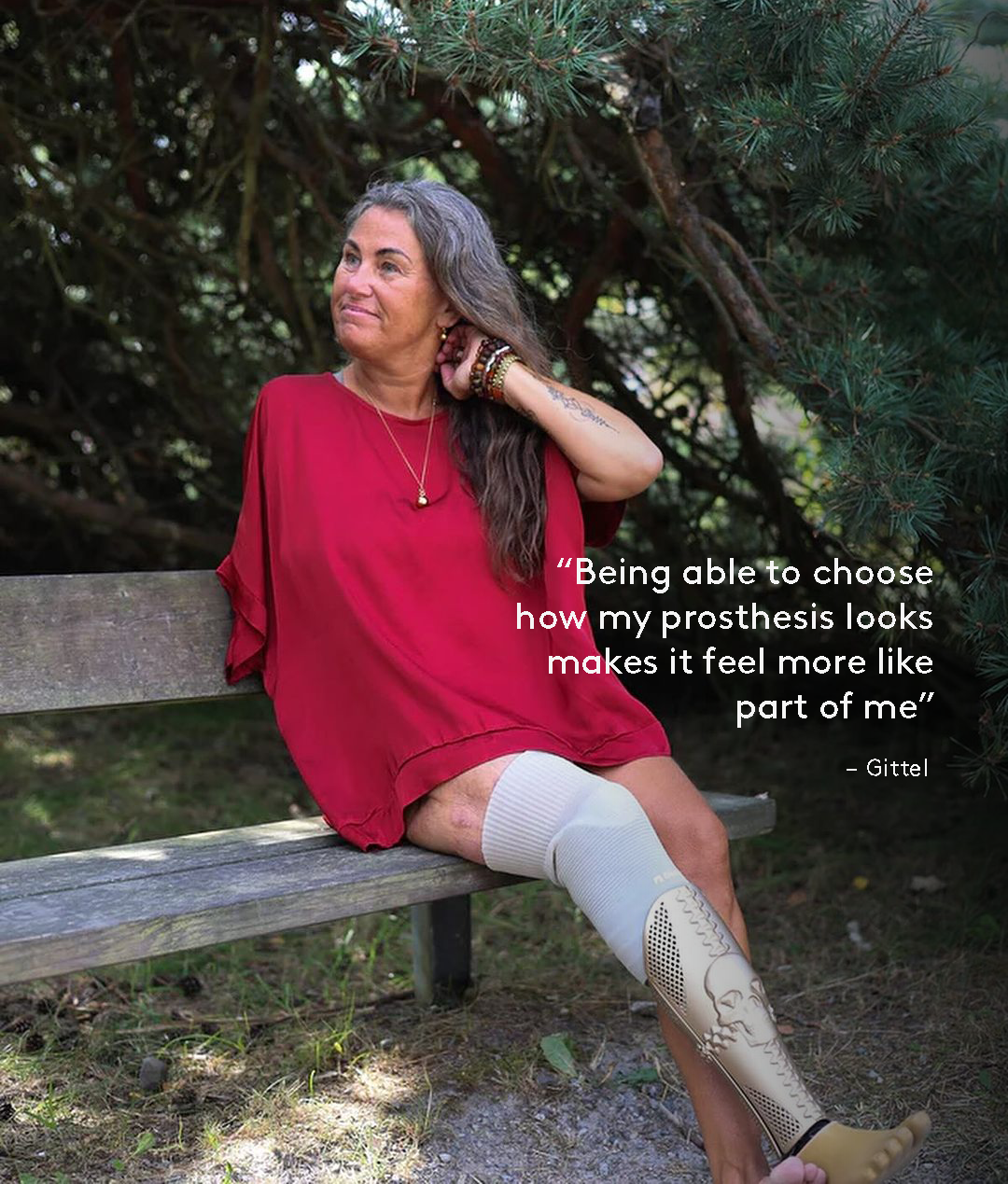
Supporting user experience & personalization
Appearance and identity are often important considerations in prosthetic care. Many clinics already work closely with users to address both functional and personal preferences.
Our covers are designed to support and enhance that aspect of care by offering aesthetic choice within a predictable clinical workflow – allowing personalization without adding complexity to the process.
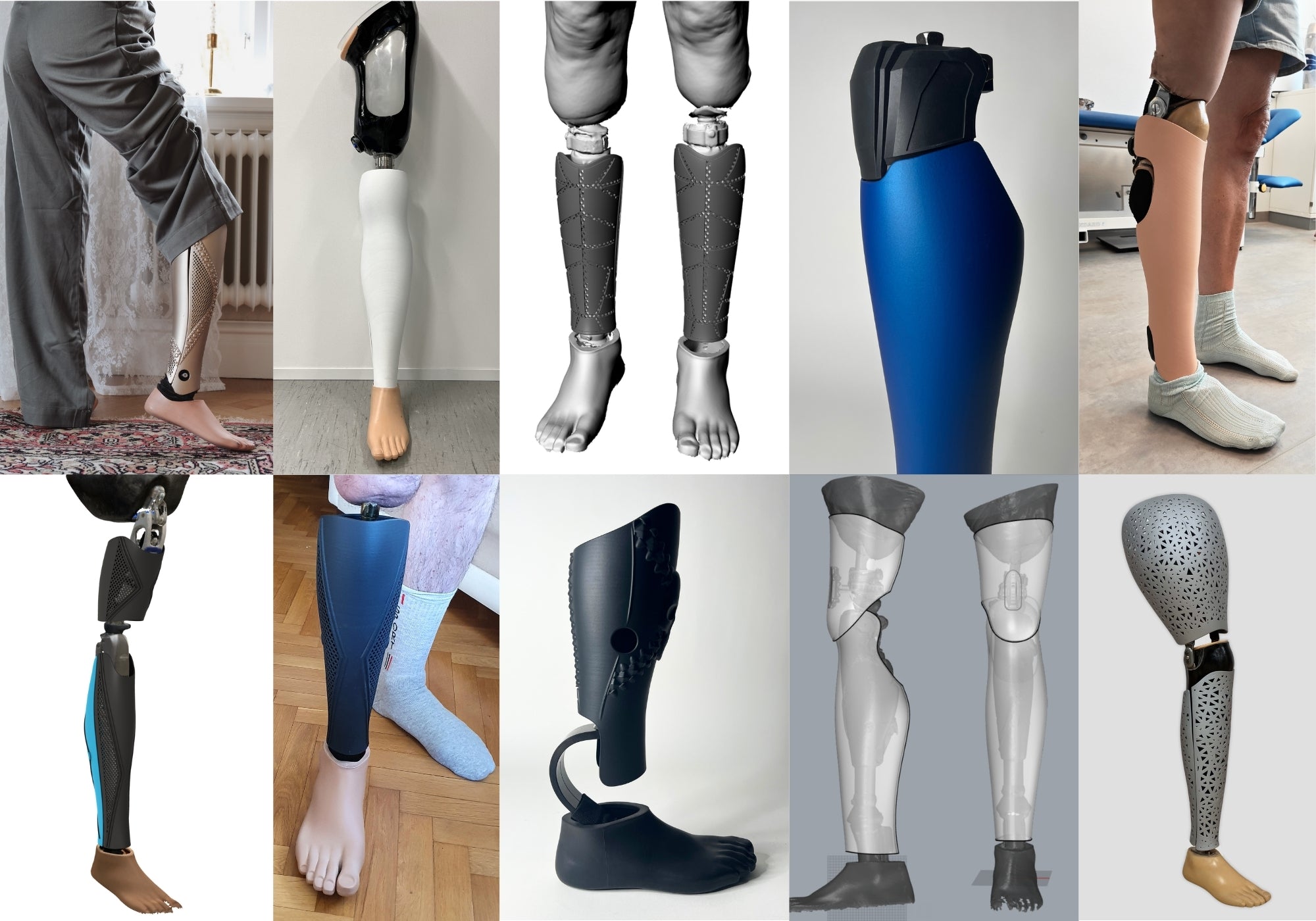
Tailored compatibility across prosthetic setups
Each cover is digitally tailored around the prosthesis and user anatomy to support a wide range of configurations and clinical scenarios. Design details such as trim lines, component clearance, and access to functional elements are adapted to the specific setup.
This also includes setups that traditionally can be more challenging to address cosmetically, such as:
- Osseointegration
- Van Nes/Rotationplasty
- Polycentric knees
- Blade-style feet
- Hip disarticulation prostheses
- Symes prostheses
For more complex prosthetic setups, additional design, adaptation or development work may sometimes be needed to achieve the best possible result. If this applies to a specific case, we’ll review the setup and confirm any additional cost before moving forward with the order.
HARD vs. FLEXIBLE
Materials
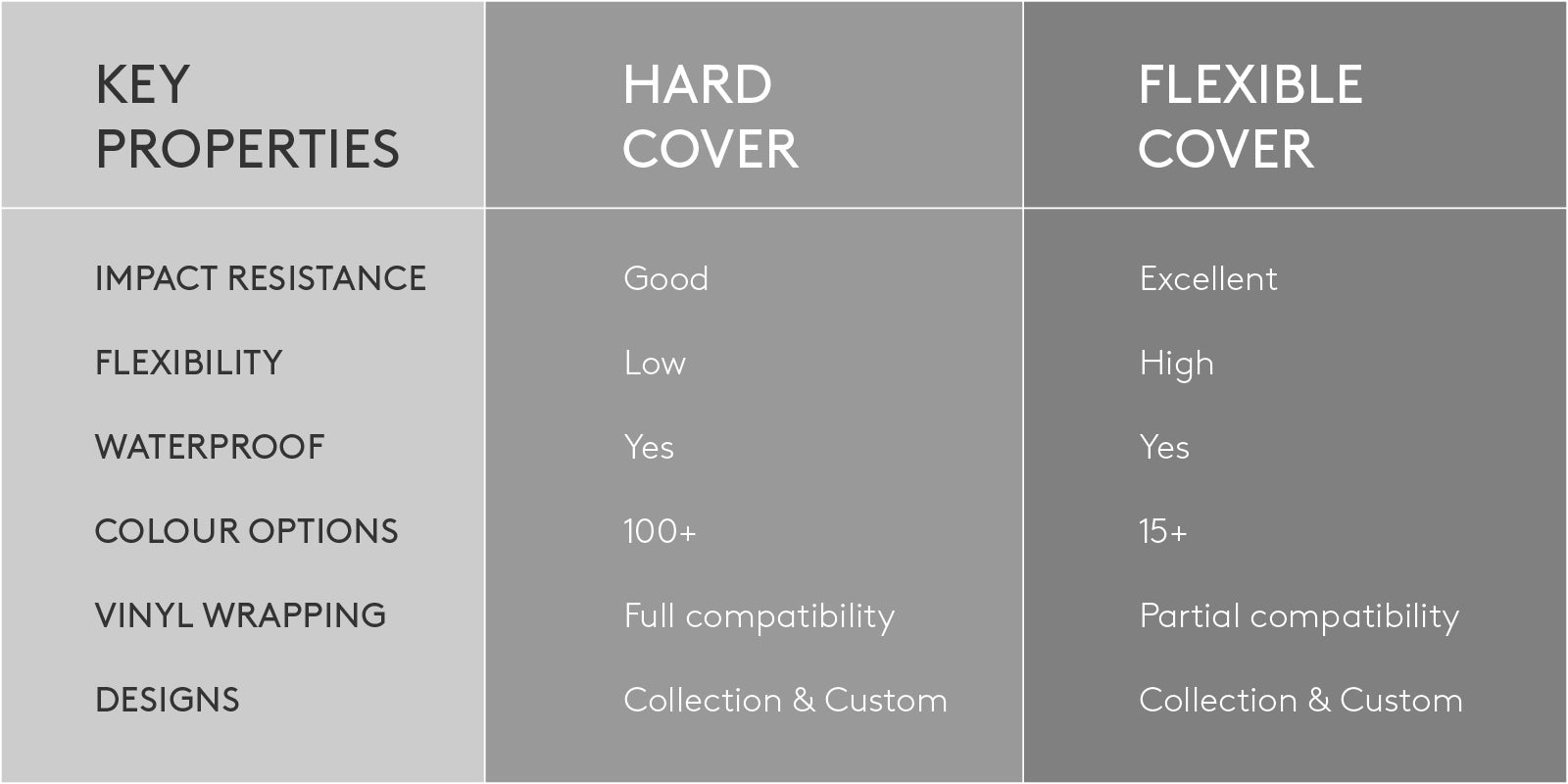
Our covers are available in two material options – hard and flexible – allowing clinics and users to choose the solution that best fits the prosthetic setup, user needs and preferences. The comparison below highlights their key differences at a glance.
Both materials are engineered for everyday prosthetic wear, with flexible covers prioritizing increased impact resilience and adaptability.
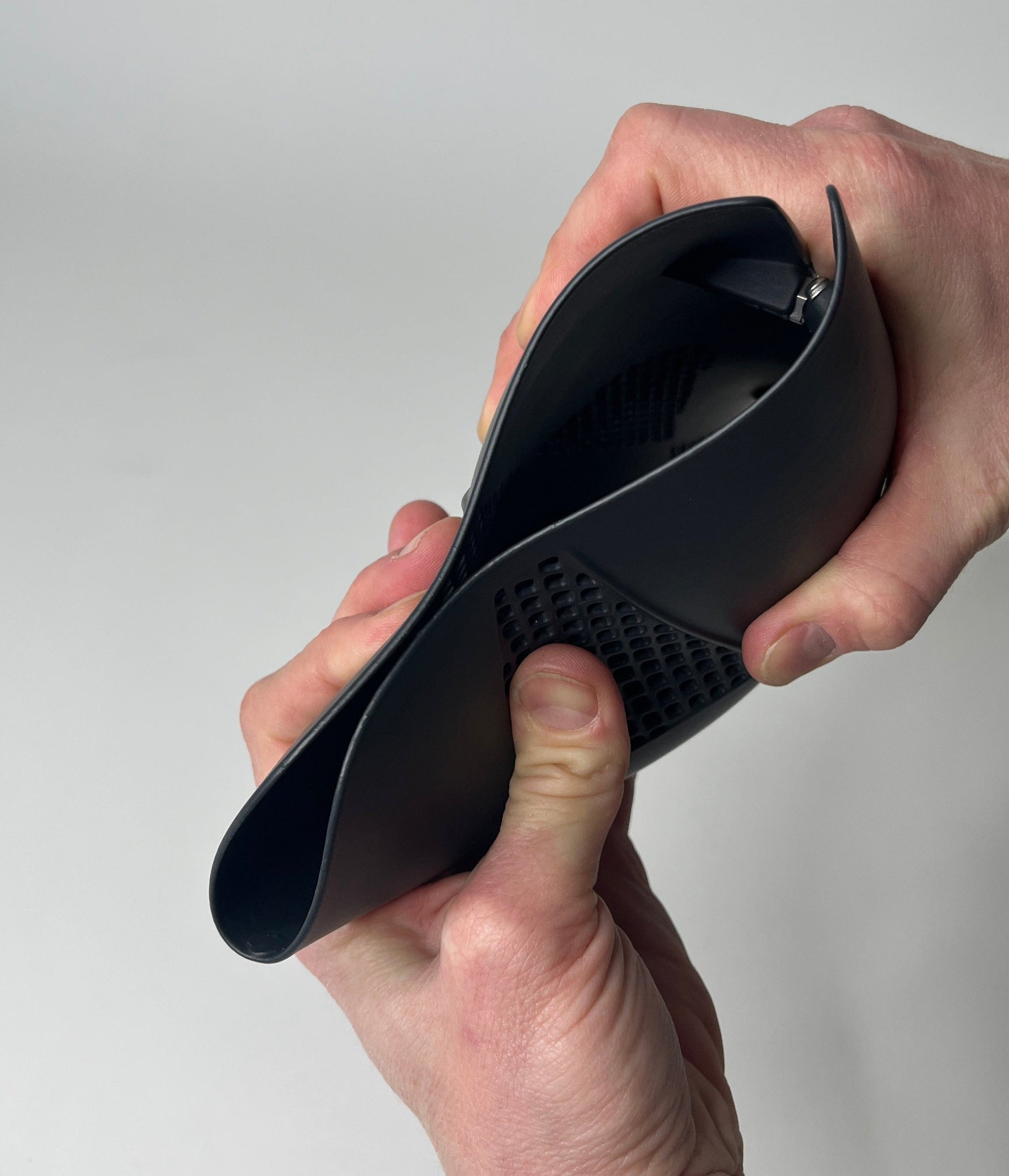
How flexible are the flexible covers?
Bend, compress or twist the cover - the material will adapt and then return to its original shape without breaking or losing structure.
Design options
From skin tones to expressive collection designs and fully custom creations developed with the user – our covers span a broad range of design options, enabling clinics to meet diverse aesthetic preferences among their users.
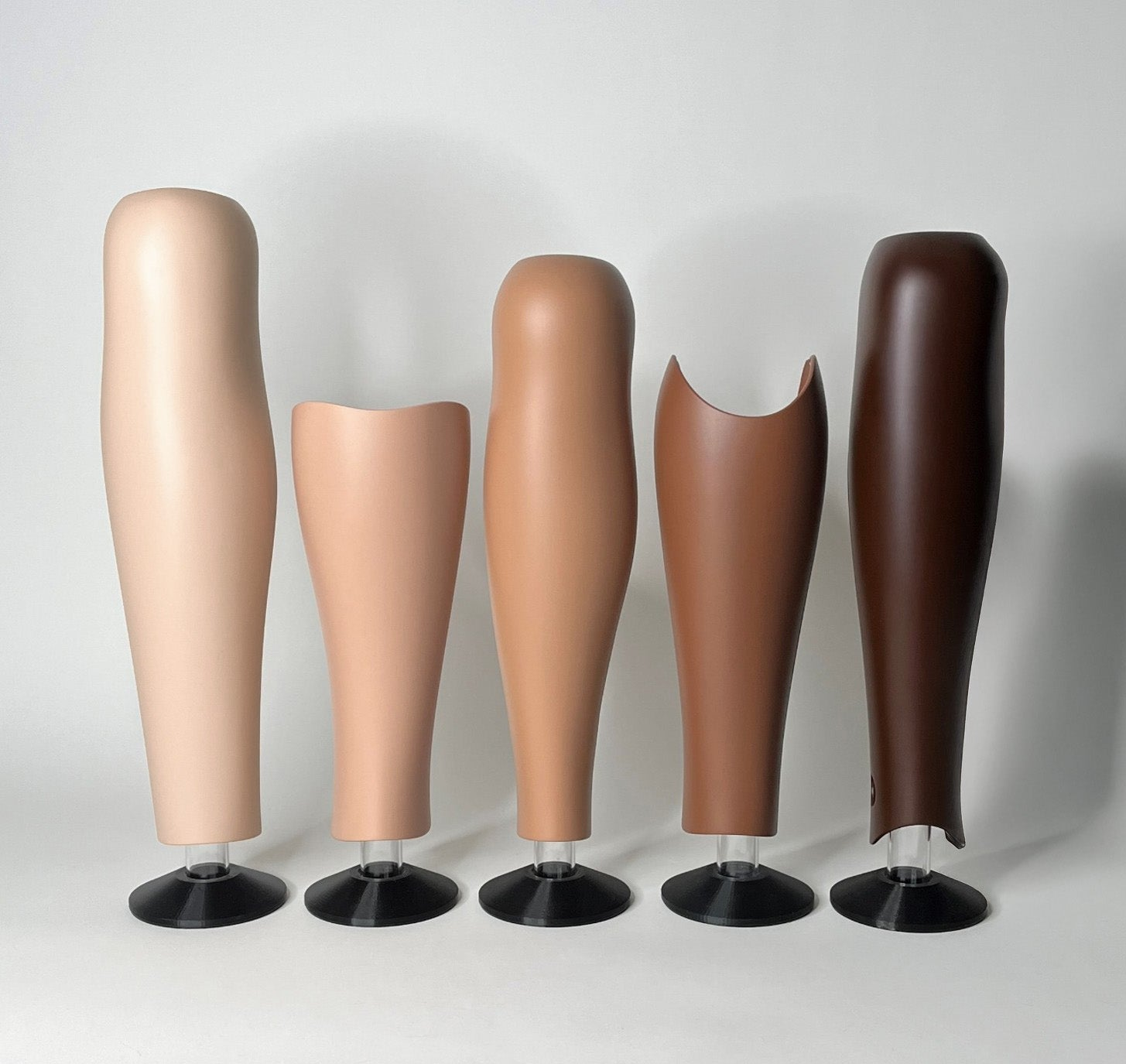
Skin tones
A range of colours designed to complement different skin tones – offering a modern cosmetic alternative to traditional foam covers.
View skin tone covers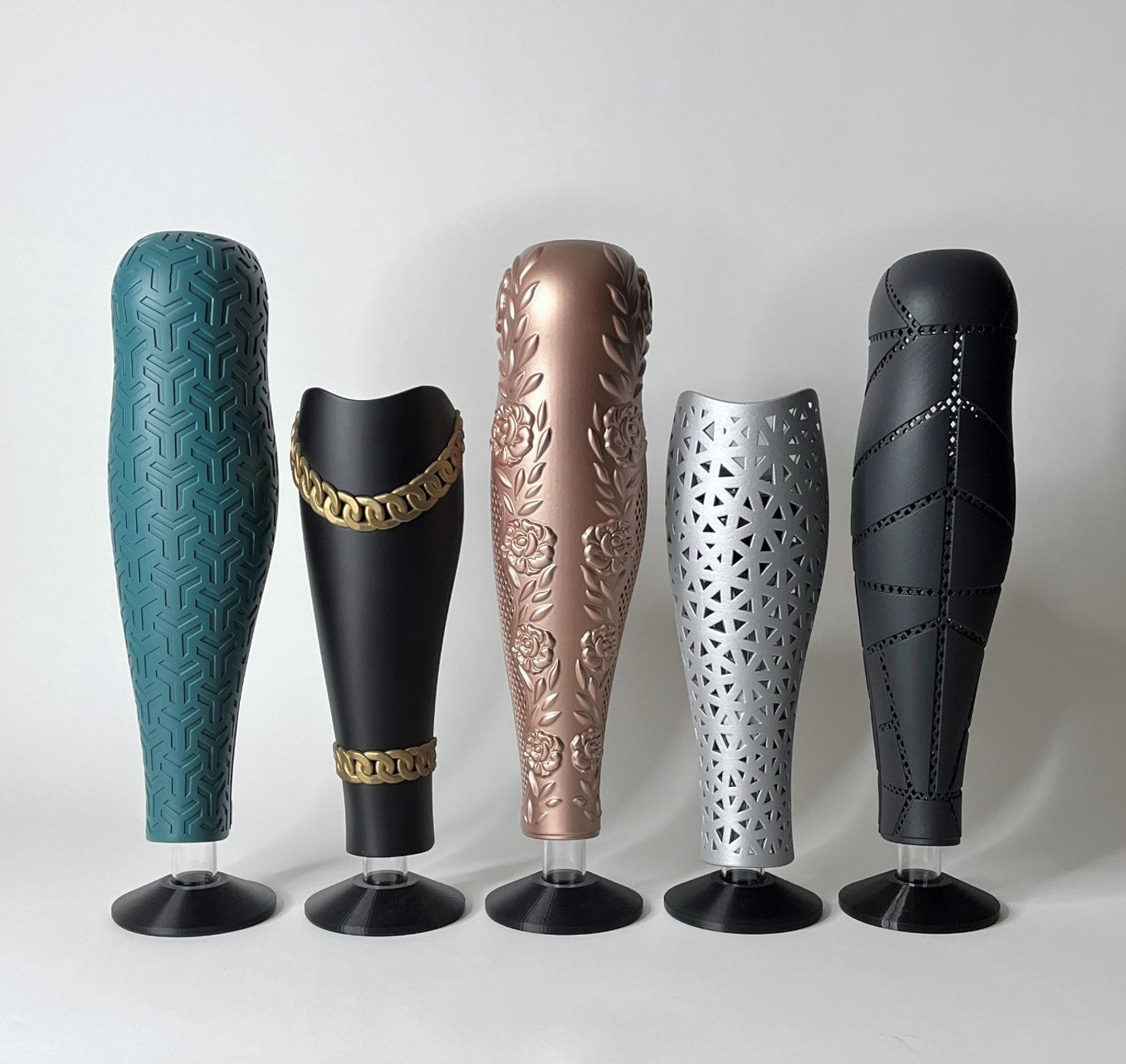
Collection
16 different designs organized into distinct style categories – helping clinics guide users toward a look that match their personal preference.
View collection designs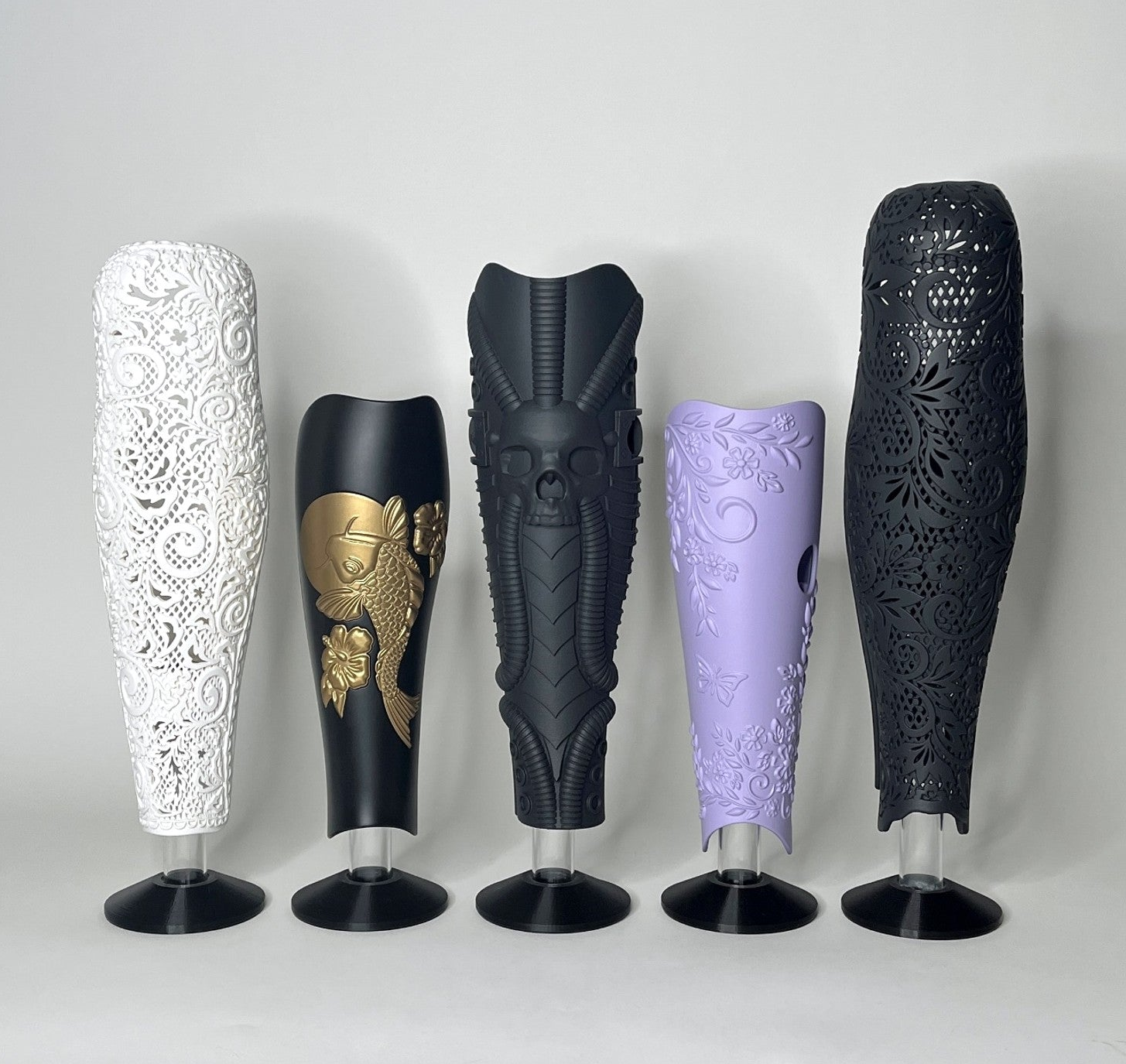
Custom design
Created in close collaboration with the user - turning their own design ideas and inspiration into functional, prosthetic-ready covers.
Learn more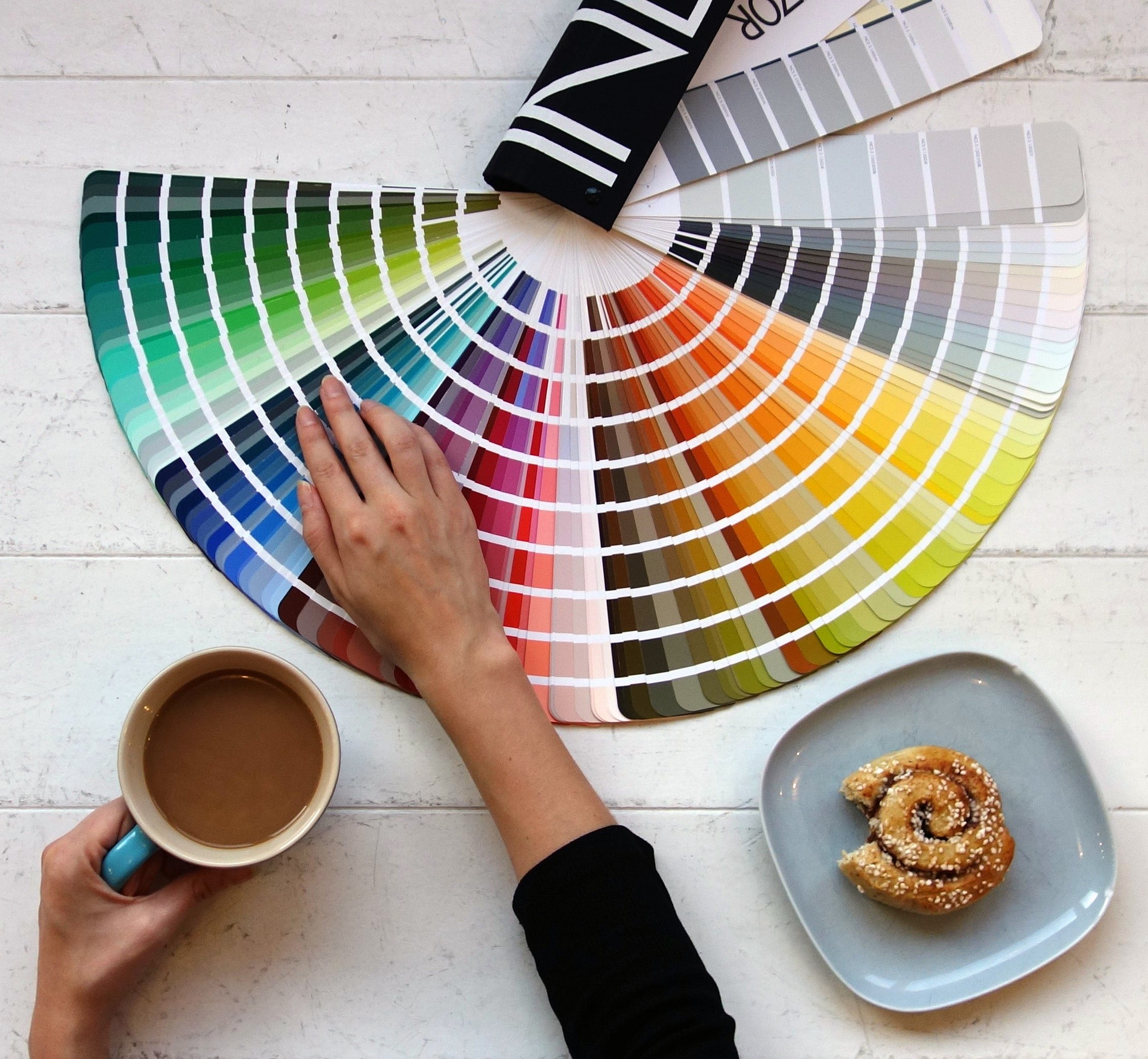
Colours & Finishes
Our covers are available in a wide range of colours and finishes, offering many aesthetic options across both hard and flexible materials.