


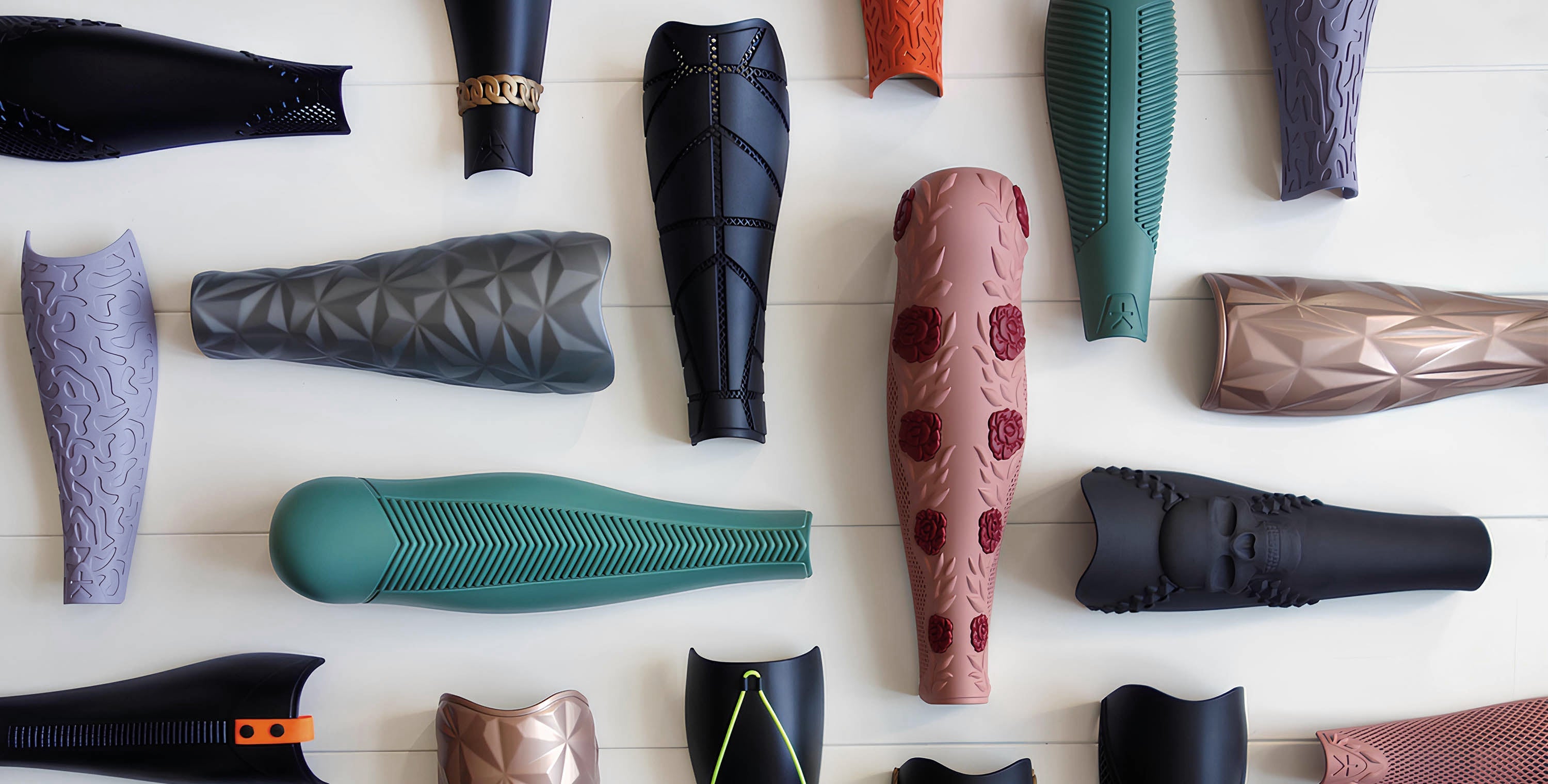
MATERIAL GUIDE
Hard vs. Flexible covers
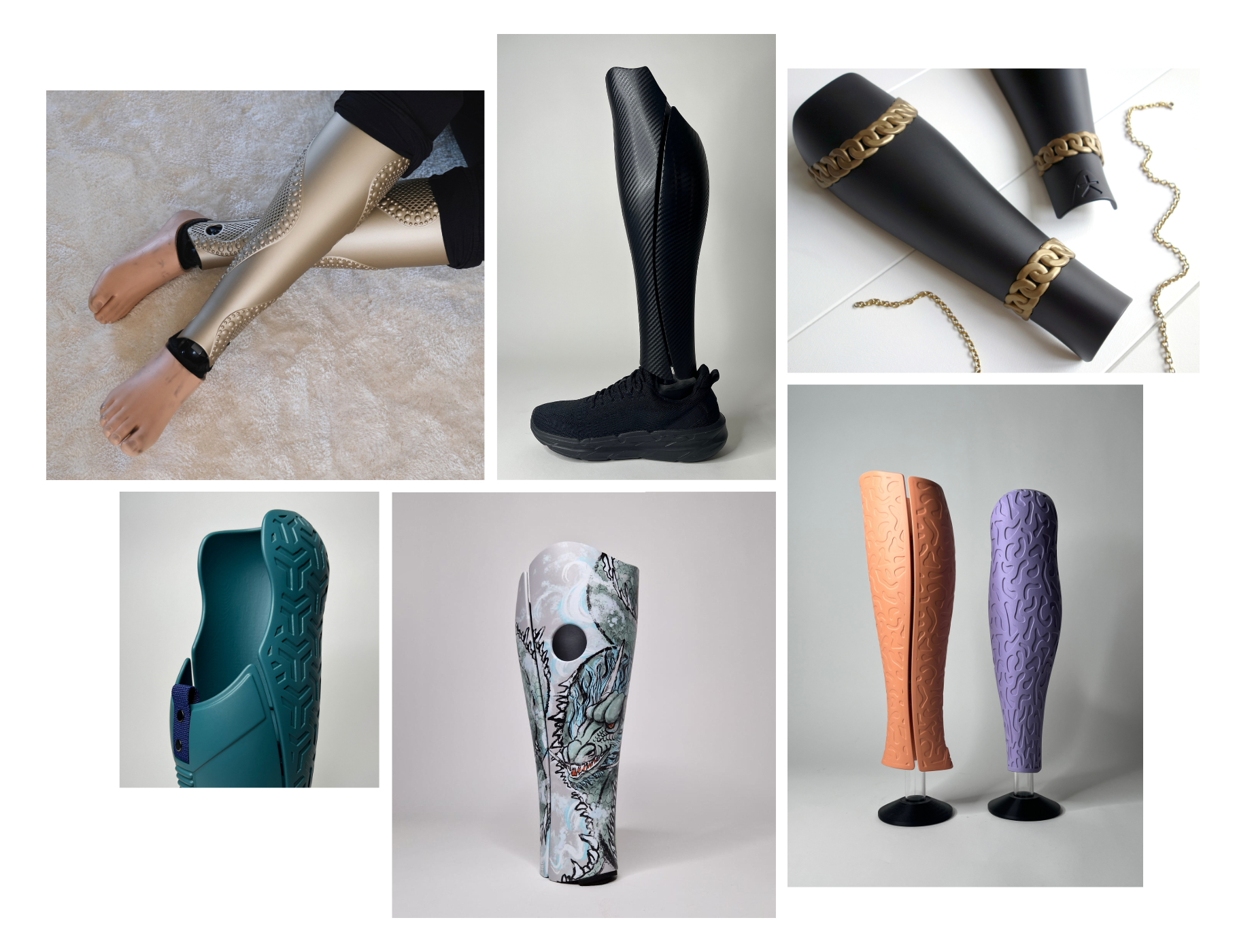
Choose between hard and flexible covers depending on your lifestyle, preferences and prosthetic setup.
Both cover options are designed for everyday use and are individually tailored to fit your prosthesis and anatomy.
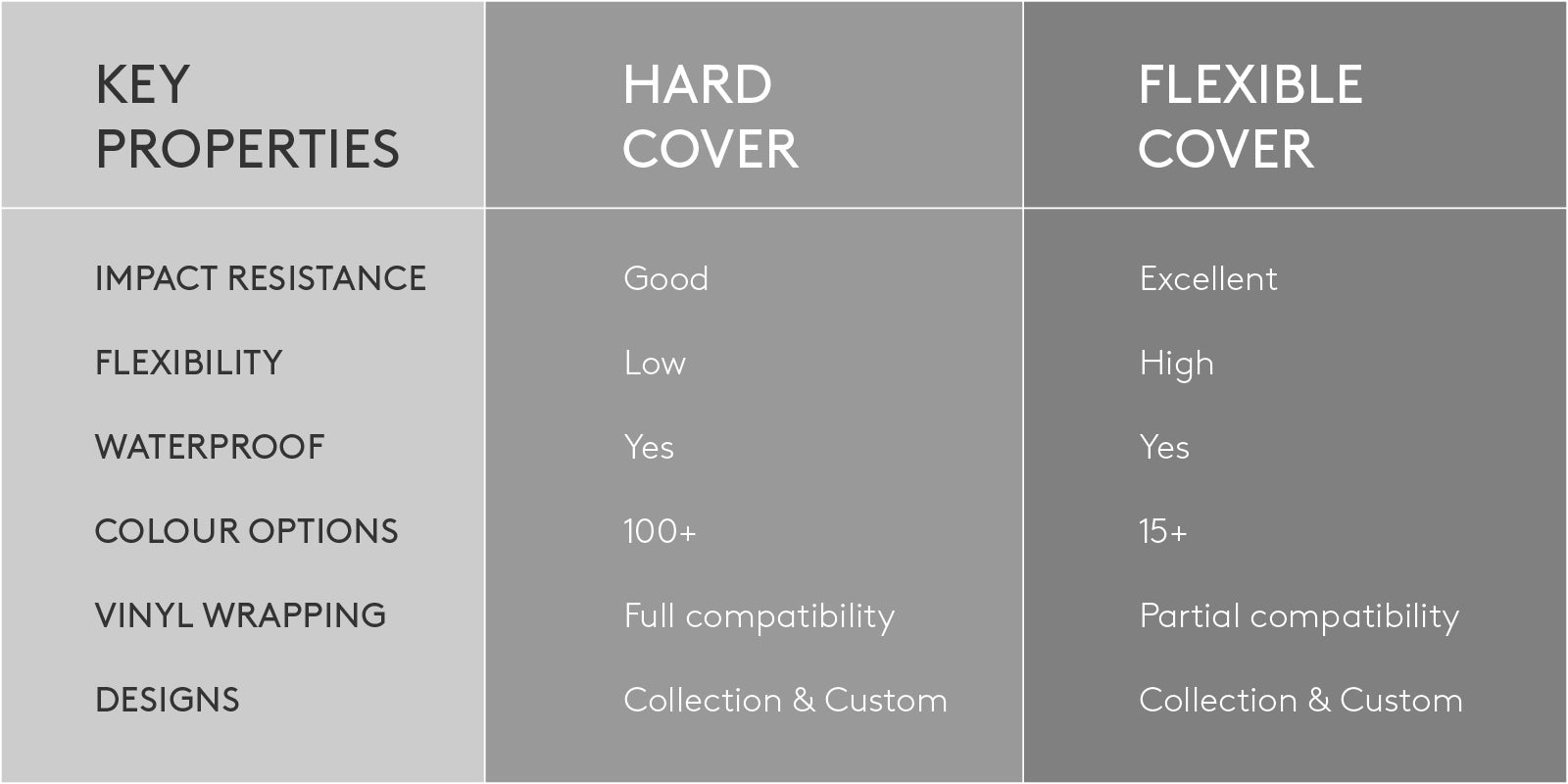
Key differences at a glance
Flexible covers stand out in impact resistance and adaptability, while hard covers offer the widest range of colour and finishing options.
Flexible covers
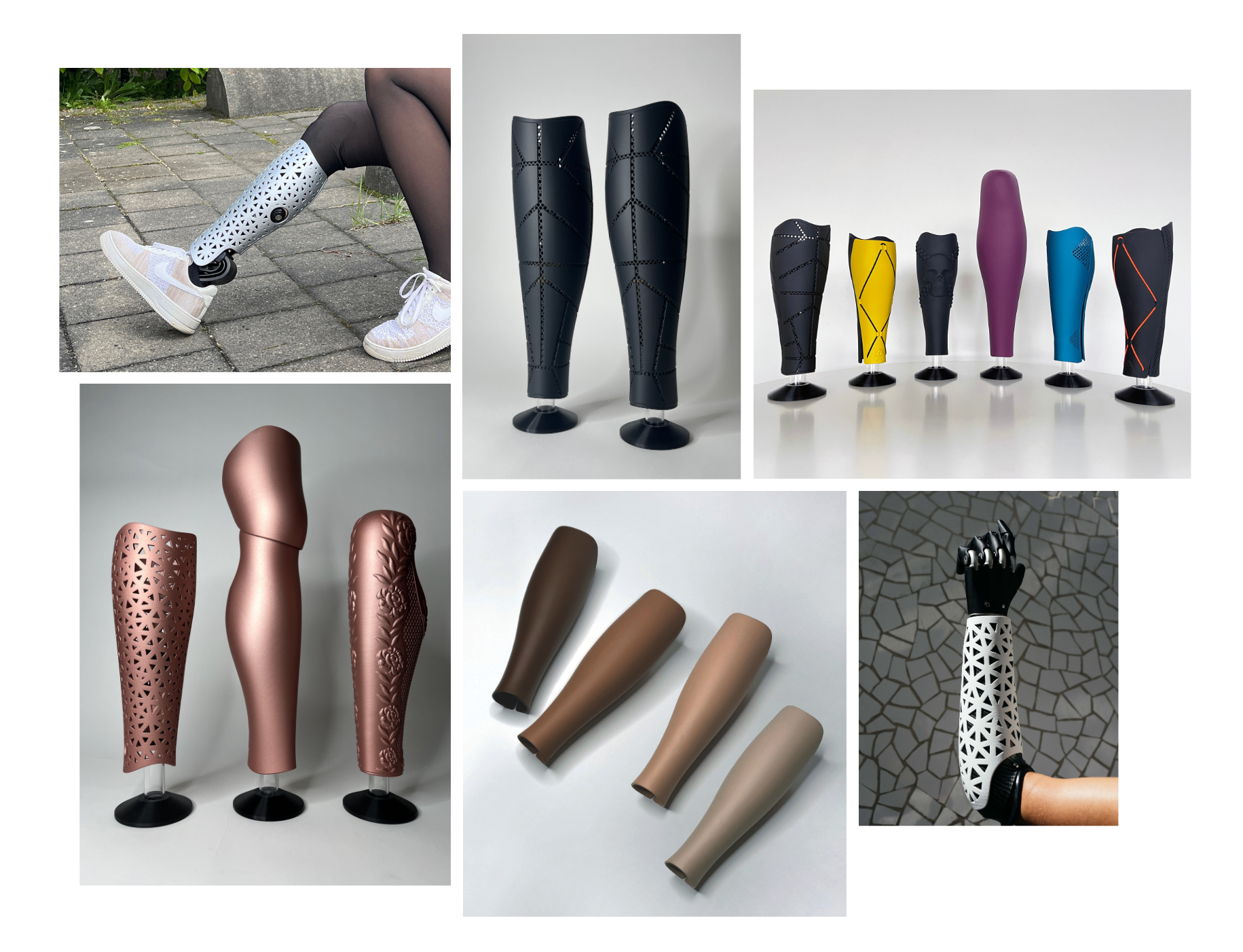
Flexible covers are made from a flexible material that allows the cover to adapt to everyday impacts without breaking.
They are our most popular cover option and are often chosen by users looking for additional resilience combined with a refined appearance.
Highlights:
- Excellent impact resistance & durability
- High flexibility without losing structure & stability
- Waterproof
- Lightweight
- Available in selected colours & finishes
- Available across all cover types for legs & arms
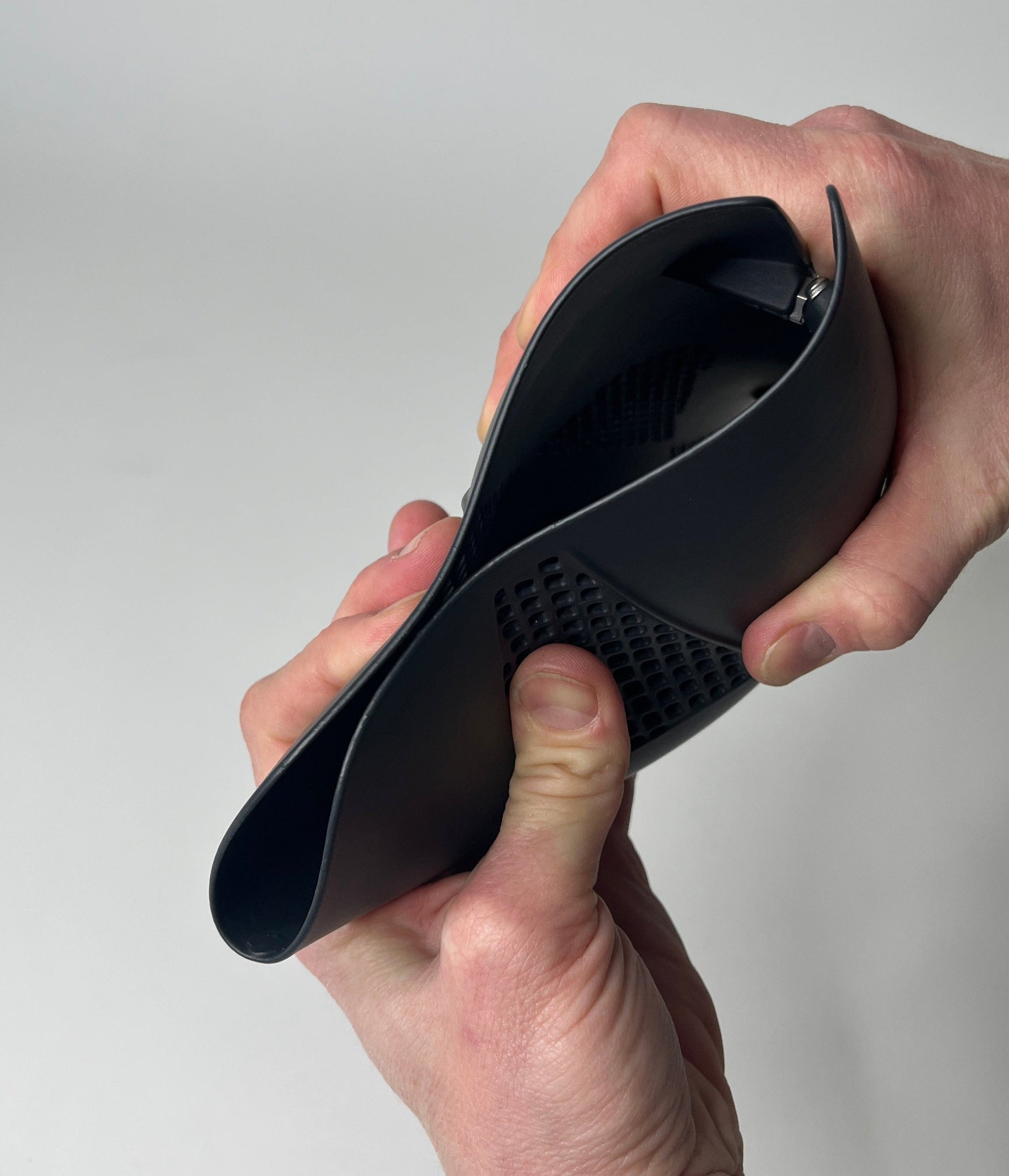
How flexible are the flexible covers?
Bend, compress, or twist the cover. The material adapts to the movement and returns to its original shape without breaking or losing its structure.
Hard covers
Hard covers are made in a rigid material and are often chosen when a specific colour, finish or design option is the priority. They offer the widest range of colour choices and full vinyl wrapping compatibility, making them a strong option for certain visual finishes and custom design needs.
Highlights:
- Wide range of colour & finish options
- Full vinyl wrapping compatibility
- Waterproof
- Lightweight
- Available for our above knee & below knee leg covers

Colours & Finishes
Both hard and flexible covers are available in a range of colours and finishes, with many popular colours available across both materials.
Explore the palettes to see which options are available for each cover type.
How the material influences the design
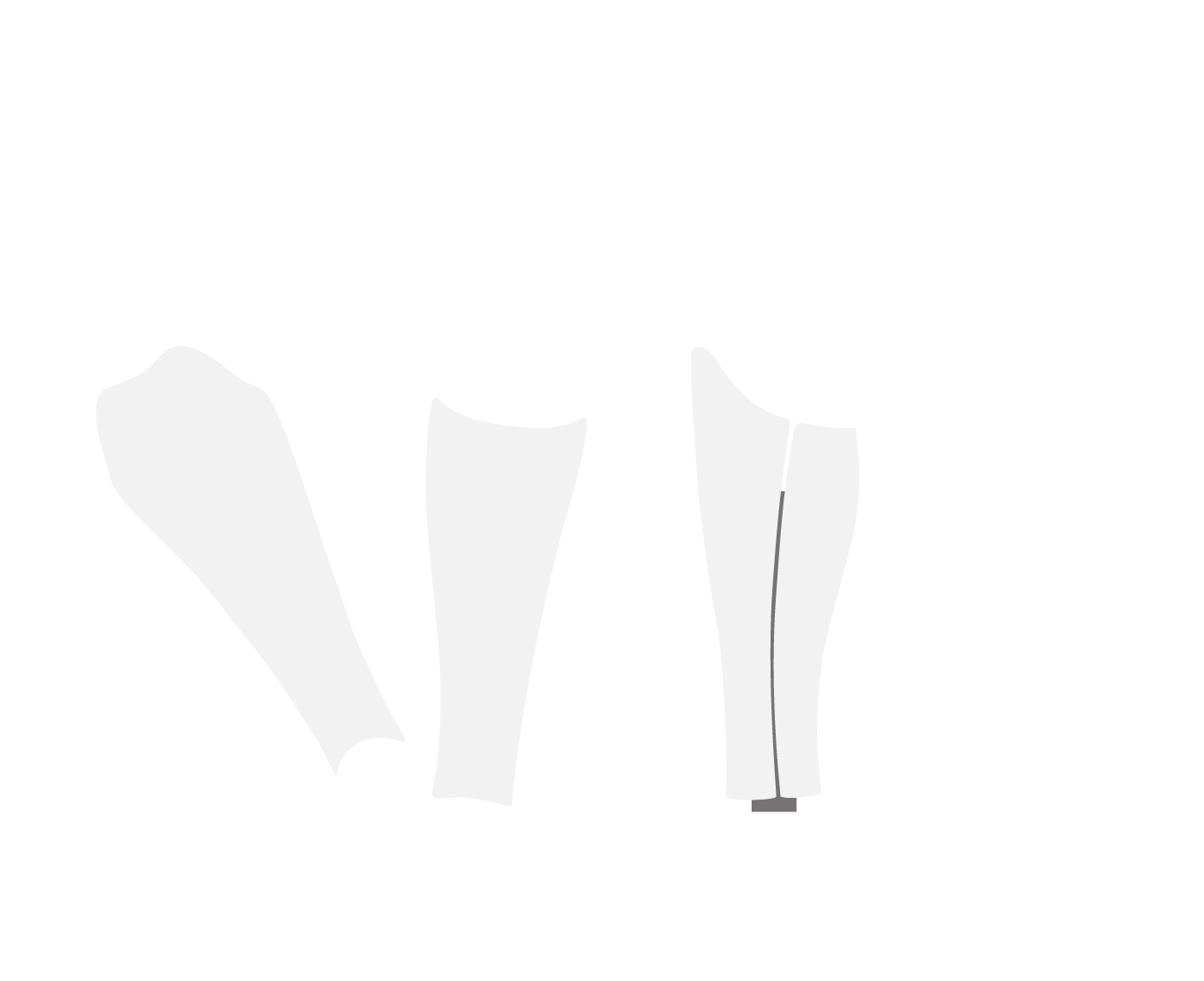
Hard covers
- Always designed as a two-part construction
- Separate front and back sections
- Parting lines positioned along the sides (medial and lateral)
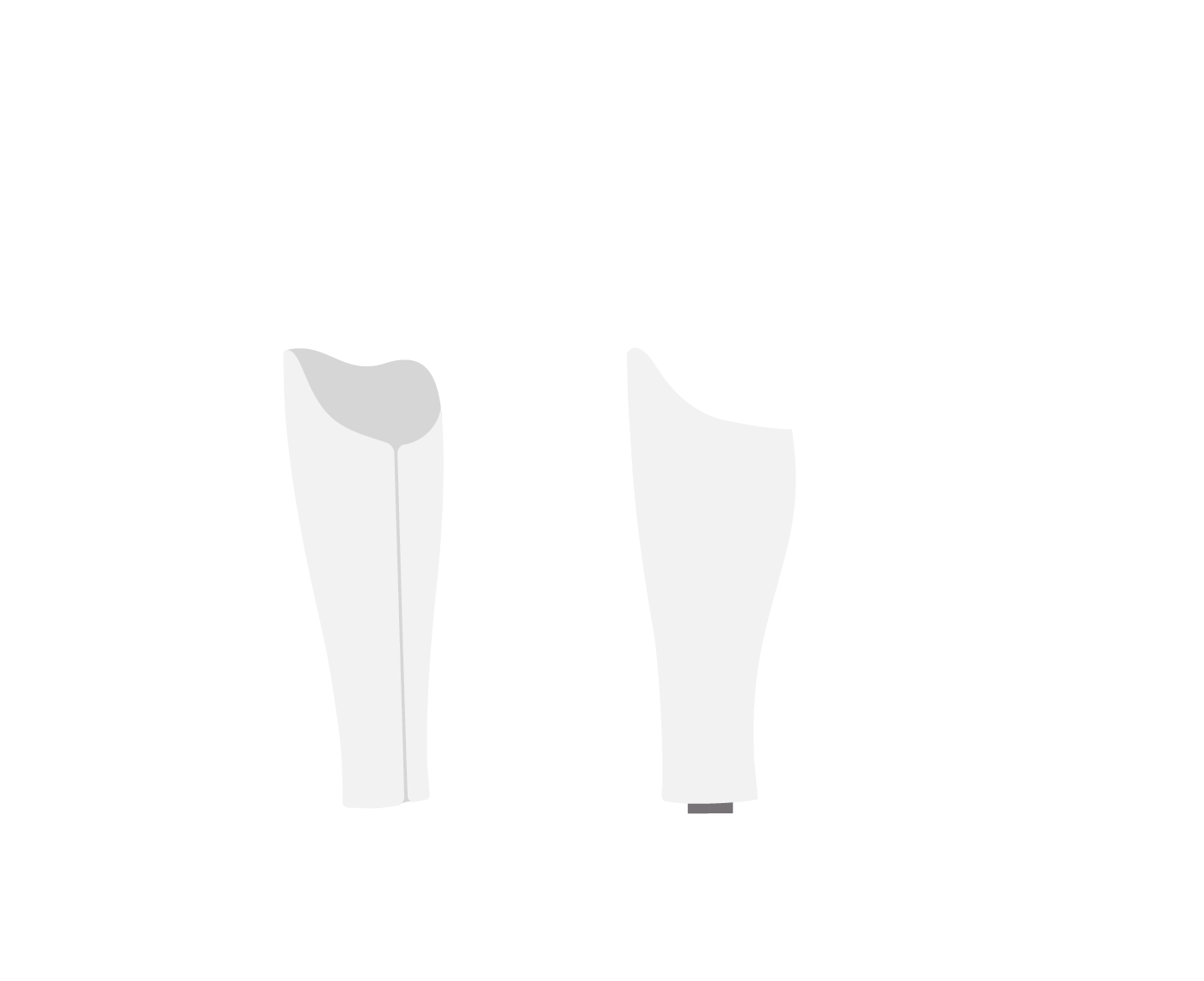
Flexible covers
- Primarily designed as a one-piece wrap cover
- A single parting line positioned at the back
- Can also be created as a two-part cover when required by the design
Need help choosing?
The best choice depends on your prosthetic setup, personal preferences and everyday needs.
Our team is always happy to guide you in the decision.