

What is a prosthetic cover?
The way a prosthesis looks can be just as personal as the clothes, shoes and accessories we choose to wear. Some prosthetic users prefer to recreate the appearance of a limb, while others are drawn to a more mechanical look, expressive designs or different colours and textures.
A prosthetic cover is one way to bring these personal preferences into the appearance of a prosthesis – offering more choice in how it looks and becomes part of your personal style.
But what exactly is a prosthetic cover, how does it work, and what options are available?
Understanding prosthetic covers
A prosthetic cover, sometimes referred to as a cosmetic cover, is an outer covering fitted onto an existing prosthetic limb to recreate shape, change its appearance or add a personal design layer to it.
Depending on its material and design, a prosthetic cover can also serve as a protective outer layer around exposed prosthetic components during everyday use.
A cover is not a prosthesis in itself, nor does it replace its functional components. Instead, it is designed around the prosthesis and its components, taking into account its shape, movement and practical requirements.
Prosthetic covers can be made for both leg and arm prostheses and come in a variety of materials, shapes, styles and finishes.
Why wear a prosthetic cover?
The reasons for wearing a prosthetic cover are as individual as the people wearing them.
For some, it's about recreating the look and silhouette of a leg or arm or adding shape and volume underneath clothing. For others, it's about bringing more colour, character or personal style into something they wear every day.
A prosthetic cover can offer possibilities to:
- Recreate the look, shape and silhouette of a limb
- Personalise a prosthesis through colours, patterns and textures
- Provide a degree of everyday protection for exposed prosthetic components
- Explore different looks and styles, and change between them depending on mood and occasion
Of course, not everyone wants to wear a cover – and that's equally fine. It's about having the choice.
What different types of prosthetic covers are available?
Cosmetic solutions for prosthetic limbs come in several forms, including traditional foam covers, silicone cosmetic solutions and 3D-printed covers.
Traditional foam covers are typically shaped to recreate the silhouette of a limb, often with a skin-coloured outer layer. Silicone cosmetic solutions can offer a more realistic representation of skin and anatomical details.
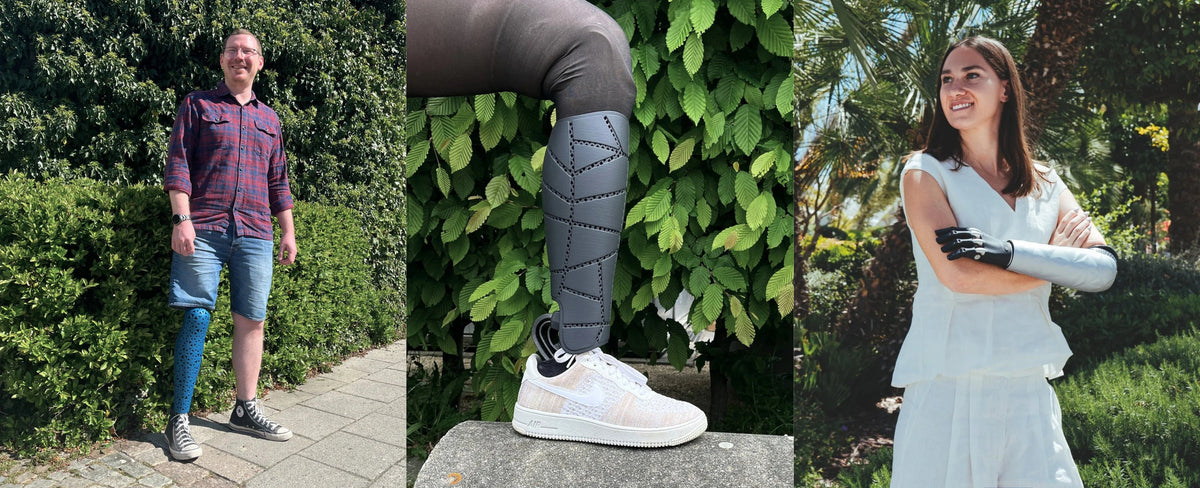
3D-printed prosthetic covers introduce another approach, combining shape recreation with a wide variety of design possibilities – from subtle, minimalistic designs and skin tones to intricate patterns, textures and sculptural elements.
Prosthetic cover options at Anatomic Studios
At Anatomic Studios, we specialise in individually tailored 3D-printed covers for both prosthetic legs and arms. Our cover types are designed for different levels of amputation and different parts of the prosthesis, with each cover adapted to the individual user's anatomy, prosthetic setup and design preferences.

Below-knee prosthetic covers (BK)
Below-knee prosthetic covers are designed for transtibial prostheses. They typically extend from the socket area to just above the prosthetic foot, recreating the shape of the lower leg.
Above-knee prosthetic covers (AK)
Above-knee prosthetic covers are designed for transfemoral prostheses. They typically extend from the prosthetic knee to just above the foot, with the shape adapted around the knee, its movement and the individual prosthetic components.
Thigh covers and full leg sets
For above-knee prosthetic users, a thigh cover can also be worn around the upper-leg section of the prosthesis. It can be worn on its own or combined with a lower-leg cover to create a full leg set with a cohesive overall design.
Prosthetic arm covers
Cosmetic covers are also available for prosthetic arms. Our prosthetic arm covers are designed for below-elbow, or transradial, prostheses and are individually adapted to the shape of the prosthetic socket.
What are prosthetic covers made of?
The materials used in prosthetic covers vary depending on the type of cover, its construction and intended use.
At Anatomic Studios, we work with two main material options for our 3D-printed covers – hard and flexible.
Both materials have their own qualities. Choosing between them comes down to your prosthetic setup, lifestyle, design preferences and what matters most to you. You can find a more detailed comparison in our material guide.
Flexible covers
Made from a flexible material called TPU (thermoplastic polyurethane), these covers can bend, compress and return to their original shape. Their flexibility and impact resistance make them well suited to everyday wear.

Hard covers
Made from a rigid polyamide material, hard covers offer a wider selection of colours, surface finishes and certain decorative possibilities.

How is a prosthetic cover fitted to the prosthesis?
Prosthetic setups can vary considerably, even between people with the same level of amputation. The socket, foot, knee, alignment and other components all influence the shape and fit of a cover.
At Anatomic Studios, each cover is individually designed using information such as 3D scans, photographs and measurements of the prosthesis and the user's anatomy.
The shape is carefully developed around the individual setup, taking into account important aspects such as foot and knee movement, charging ports, valves and access to adjustments where needed.
Most of our leg covers use a click-on attachment system that allows the cover to be easily attached, removed and adjusted. This also makes it easier to clean the cover separately and access the underlying prosthetic components when needed.
Can you personalise a prosthetic cover?
Absolutely. And this is where things get particularly interesting.
A prosthetic cover can be understated and minimal, inspired by your favourite fashion styles, or designed around something entirely personal to you.
From different finishes, skin tones and metallic colours to geometric patterns, floral elements, engravings and sculpted 3D details – there are many different ways to approach the design of a prosthetic cover.
At Anatomic Studios, you can choose from our existing collection designs or, depending on the cover type, create a custom design together with our team.
Even when choosing an existing collection design, the shape and fit of the cover are individually tailored to you and your prosthesis.
And if you're exploring a custom design, you don't need to have it all figured out. A favourite colour, a reference image, a texture or simply an idea can be a great place to start.
How do you get a prosthetic cover?
If you're interested in getting a prosthetic cover, a good first step is to talk to your prosthetist or prosthetic clinic.
They can help you explore suitable cover options, assess compatibility with your prosthesis, collect the information needed and look into potential funding or reimbursement options.
At Anatomic Studios, the process typically involves four steps:
- Choose your cover – explore cover types, materials, designs and colours.
- Provide your prosthetic information – including 3D scans, photographs and measurements.
- Review your design – our team creates a digital design proposal for you to review and approve before production.
- Receive your cover – once produced and finished, your cover is delivered ready to be fitted and worn.
You can also order directly from Anatomic Studios if you prefer to manage the process independently. Find more information in our guide to getting a prosthetic cover.
How much does a prosthetic cover cost?
The cost of a prosthetic cover depends on several factors, including the type of cover, material, level of individual adaptation and design.
Depending on where you live and your individual circumstances, a prosthetic cover may be fully or partly covered through public healthcare, private insurance or other funding arrangements.
Your prosthetic clinic is usually a good starting point for understanding what options may be available to you. You can also find more information in our frequently asked questions.
More room for personal style
At Anatomic Studios, we believe that what you wear should feel like you – and your prosthesis should be no exception.
Whether that means a subtle skin tone, a clean Scandinavian design or something bold and entirely your own, there is no right or wrong way for a prosthesis to look.
It's your prosthesis, your style and your choice.
Curious to explore what's possible?
Browse our prosthetic leg covers and arm covers to discover the different designs, colours and styles available.